I warmed my hands by the fire. The crisp fall day had ushered me through rolling loess hills, past newspaper offices whose names are as vibrant as their communities: Stanberry Headlight. Fairfax Forum. Tarkio Avalanche. I learned that Tarkio is a Native American word that means, “Wikipedia thinks Tarkio is the place where walnuts grow.” Now, pausing briefly beside a roaring fire in an honest-to-God fireplace at the Missouri Welcome Center outside Rock Port, I reflected on my discoveries so far.
Even from a distance, Conception Abbey peeks above the horizon. The giant 120-year-old brick basilica rises from the pastoral landscape. It’s home to 65 Benedictine monks, who comprise nearly a third of the population of Conception, Missouri. Back in 1893, the building was only two years old when a tornado hit it. So the monks lovingly restored it, using what must be a billion bricks. Only a few blocks away, the Benedictine Sisters of Perpetual Adoration set up shop in Clyde, Missouri, proud that they possess more documented saintly artifacts than any other spot in the country.
The edifices that house the monks and sisters used to be the tallest elements on the skyline along this rolling prairie. No longer. Their newest neighbors tower above them, giant wind generators which have sprouted like dandelions on nearby farms. Still, there’s absolutely no truth to the rumor that the Sisters of Perpetual Adoration will change their name to the Sisters of Propeller Adulation.
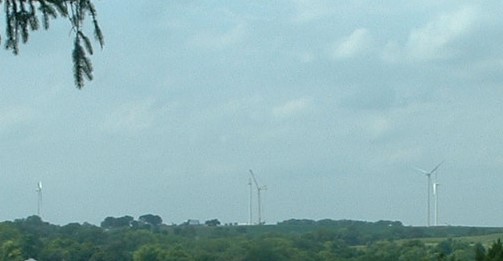
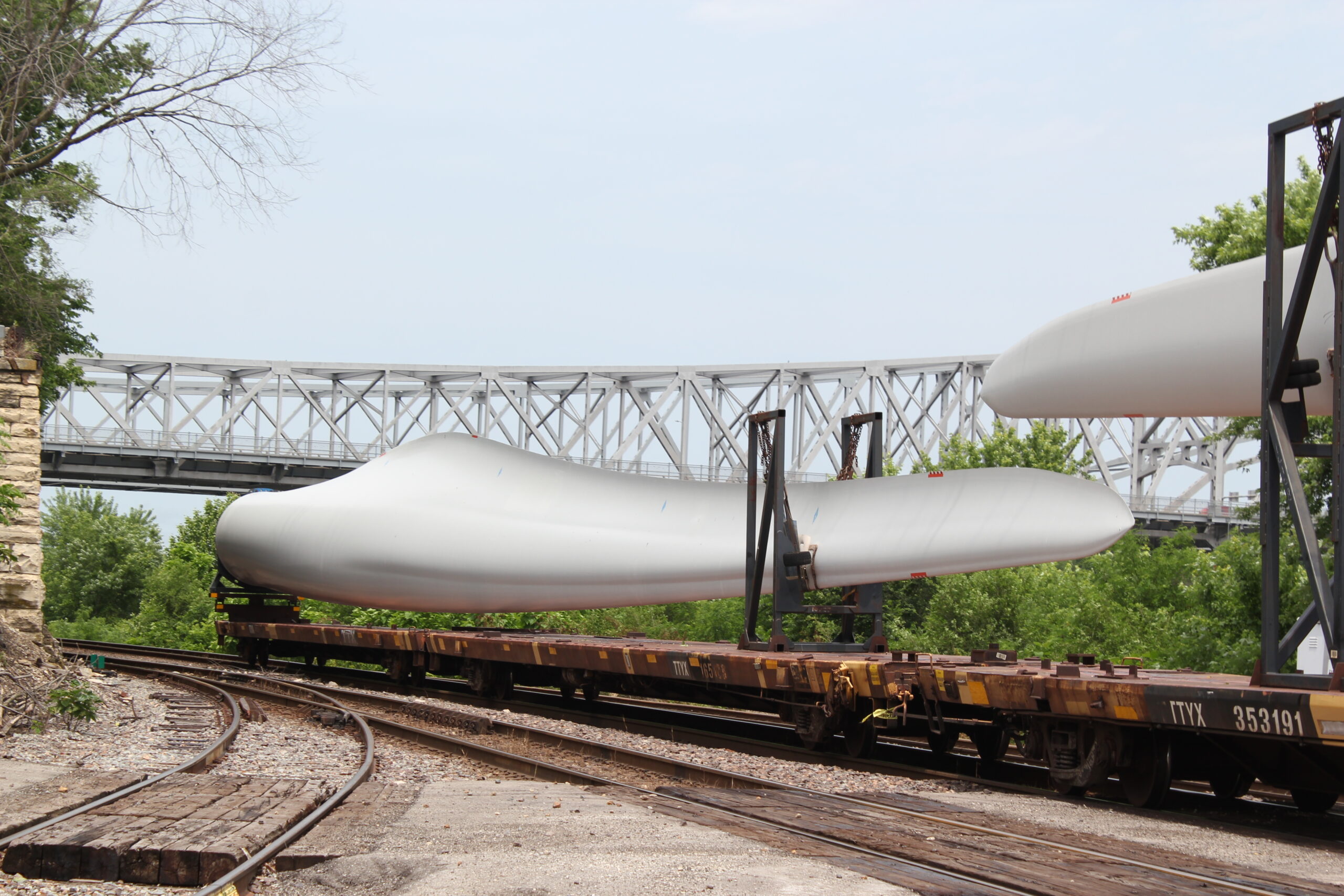
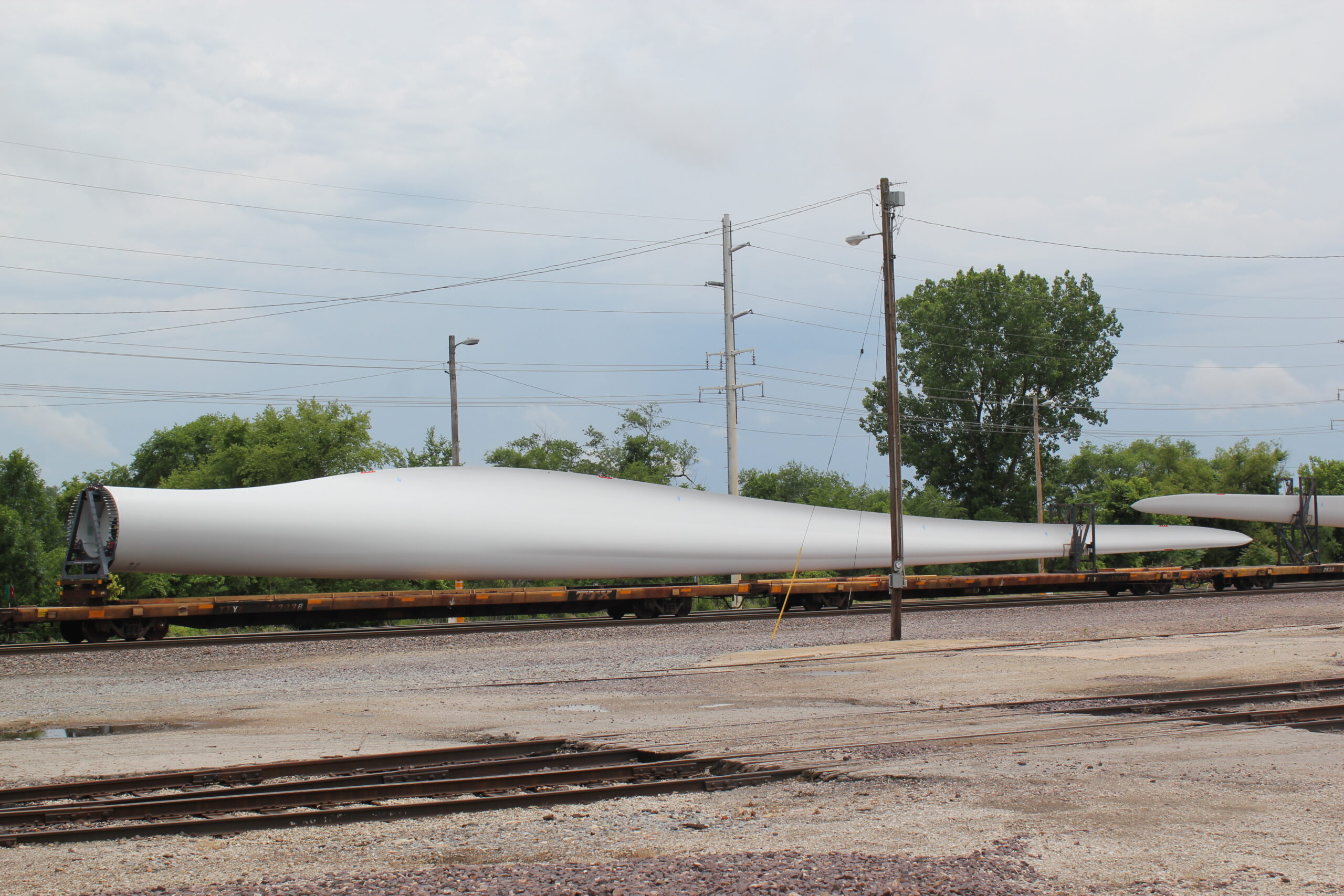
The windmills are worthy of awe. The towers rise 250 feet in the air, their three blades resembling 90-foot-long airplane propellers. I’d heard about ’em, but I’d never seen one. So when we drove into the countryside, I could see them in the distance. As we came closer, more and more appeared, each one sitting on a solitary stilt, planted on the landscape. These graceful creatures looked a bit like aliens from War of the Worlds. The propellers are so big that each blade looks like it’s moving in slow motion.
Some people don’t like them, say they don’t belong on the landscape. They’re ugly, folks protest as they cling to their cell phones, which bounce their signals off of ugly cell phone towers. Granted, the wind turbines make more noise than cell phone towers, but less chatter.
We drove down the road, and I could see in the near distance a lady walking from her farm house to her mailbox. Behind the house, not a quarter-mile away, was a giant windmill, each of its three propeller blades slicing through the air with an audible whoosh, a low roar like wind forcing its way through a mountain pass. We approached her and rolled to a stop by the mailbox. She turned to face me, and I asked, “Does the noise bother you?”
“Oh, yes,” she said. “I have trouble sleeping at night. Even in the spring and fall, when we would normally open our windows for some fresh air, we keep them closed to shut out the noise.”
I’d heard her argument before. Some folks are incensed by the noise of a dozen generators; others are angered by the smell of 10,000 hogs. Each has a point: Good fences make good neighbors. But what happens when the wind farmer can’t keep the noise inside her fence, and the hog farmer can’t contain the smell? I wished the woman well and drove down the road past a half-dozen of these monstrous wind catchers, thinking about the price of progress.
From his tomb in Westminster Abbey, 4,000 miles away, Sir Isaac Newton whispered a reminder to me: “For every action, there’s an equal and opposite reaction.” The windmills generate electricity and a new profit for farmers. But their noise brings an equally noisy reaction from some neighbors and naysayers. The windmills are working. As I drove through the countryside, the wind speed hit 13 mph, near peak efficiency for these giant generators. Nearby Rock Port made national headlines a couple of years ago as the first American town totally powered by wind. And after its 1,300 residents get all the electricity they need, they sell the excess power to other communities. A University of Missouri natural resource engineer says that Rock Port residents won’t see an electric utility rate increase for a dozen years. Farmers love windmills because farming wind is a lot easier than raising cattle or corn. The windmill company sends a rent check every month.
–from A Road Trip Into America’s Hidden Heart
Share this Post